Welcome To Glint News.....
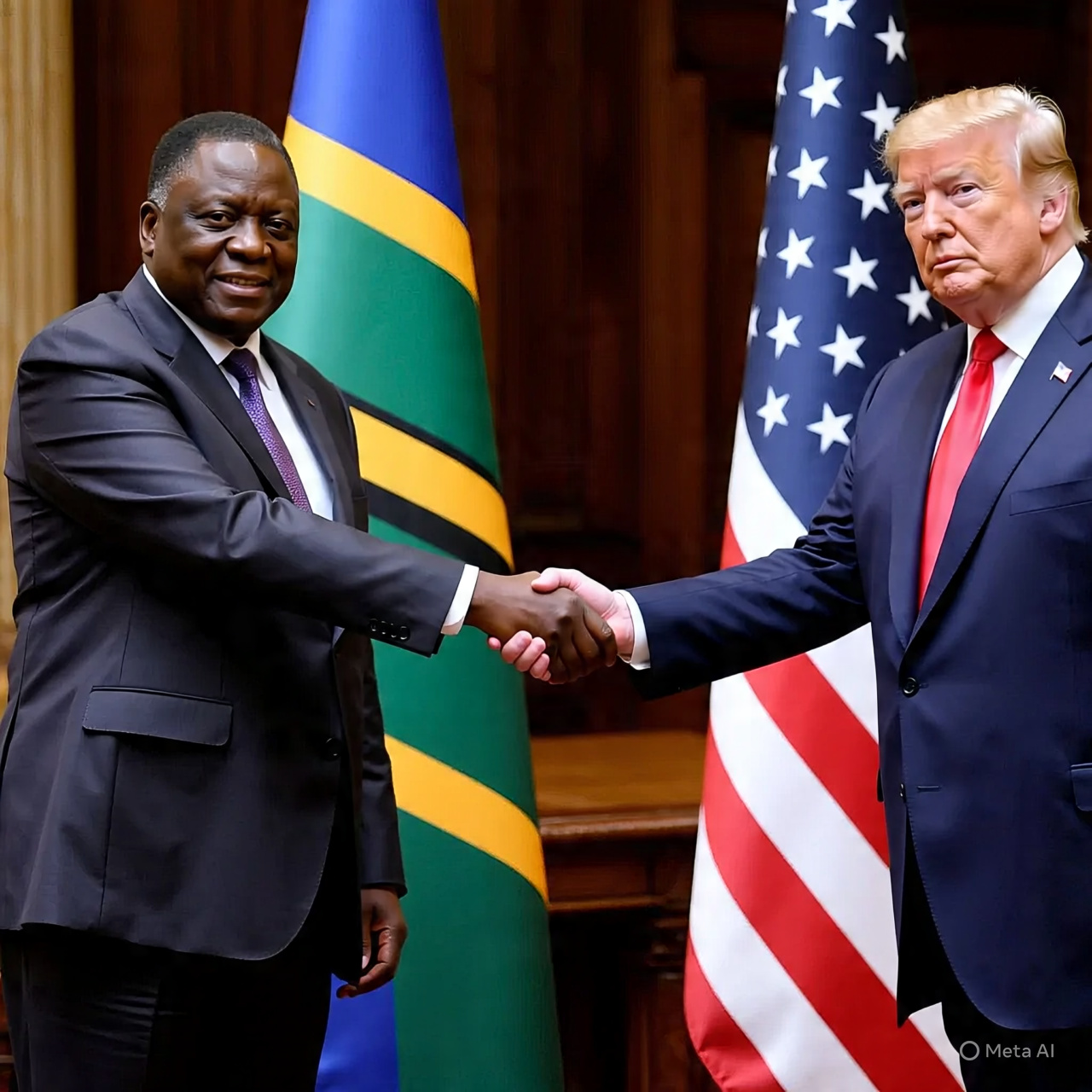
Trump Declares Boycott of G20 Summit in South Africa, Calls Host Nation a “Total Disgrace” Over Alleged Human Rights Abuses
By Allien | Glint News International Desk
WASHINGTON D.C., November 8, 2025 — In a move that has ignited a wave of global reactions, U.S. President Donald Trump has announced that no American official will attend the upcoming G20 Summit scheduled to take place in Johannesburg, South Africa, from November 22 to 23. The declaration was made through Trump’s official Truth Social account late Friday, where he described the decision as a stand “against injustice and hypocrisy on the world stage.”

“It is a total disgrace that the G20 will be held in South Africa,” President Trump wrote. “The country has become a center of human rights abuses, lawlessness, and corruption — the U.S. will not lend its legitimacy to such a gathering.”
The statement marks one of the most dramatic diplomatic gestures of Trump’s second term, effectively isolating the United States from a summit that traditionally serves as the central platform for global economic cooperation among the world’s major economies.
The G20 Summit, hosted this year by South Africa, is expected to bring together leaders from the world’s 20 largest economies, including China, Russia, the European Union, India, Japan, and Brazil. The event is designed to address global challenges ranging from climate change to debt restructuring, digital innovation, and sustainable development.

Trump’s boycott announcement, however, threatens to overshadow the agenda and may deepen existing divisions between Washington and several global partners. Analysts say the move signals a continuation of the Trump administration’s “America First” foreign policy, prioritizing domestic political optics and ideological alignment over multilateral engagement.
In his post, Trump cited what he called “systemic human rights violations and political oppression” in South Africa — allegations that the South African government has vehemently denied. The U.S. president pointed to reports of xenophobic violence, corruption scandals, and controversies surrounding land reform as reasons for the boycott.
South African officials have since condemned Trump’s remarks as “deeply irresponsible and racially charged,” accusing the U.S. president of spreading misinformation and undermining Africa’s role in global diplomacy.
“South Africa is a democratic nation governed by the rule of law,” said Minister of International Relations and Cooperation Naledi Pandor in a statement. “We reject any attempt to delegitimize our sovereignty or our hosting of the G20 Summit.”
The announcement has triggered widespread debate across the international community. European and Asian leaders expressed disappointment at Washington’s absence, warning that the boycott could weaken coordinated efforts on key global issues, including inflation, energy security, and digital economy regulation.
Chinese Foreign Ministry spokesperson Zhao Lijian called for “restraint and mutual respect,” adding that “global challenges require collective solutions, not political boycotts.” Meanwhile, Russia’s foreign ministry labeled the move “predictable,” accusing Washington of “weaponizing human rights narratives for geopolitical gain.”

Domestically, the decision has drawn mixed reactions within the U.S. Congress. While some Republican lawmakers praised the president for “taking a strong moral stand,” Democrats criticized the move as “an act of isolationism that harms U.S. influence abroad.”
The boycott threatens to strain Washington’s already fragile relations with several African nations. Over the past year, U.S. engagement with the continent has faced criticism for being inconsistent, particularly in contrast to China and Russia’s expanding influence through infrastructure, defense, and energy partnerships.
Trump’s harsh comments may further alienate regional allies and complicate future economic and security cooperation, analysts say.
“This is a setback for U.S.-Africa diplomacy,” noted Dr. Linda Adebayo, a senior fellow at the African Policy Institute in Nairobi. “The G20 Summit was an opportunity for Washington to rebuild trust and reassert its global leadership. Instead, the boycott sends a message of disengagement and disdain.”
Despite the controversy, South Africa has reaffirmed its commitment to hosting a successful summit. Preparations are reportedly in full swing, with security tightened around Johannesburg amid expectations of large-scale protests and heightened international scrutiny.

As the world’s attention turns toward the G20, the absence of the United States — traditionally one of the group’s most influential members — is expected to cast a long shadow over the proceedings.
Whether Trump’s bold diplomatic move will resonate as a principled stand or be remembered as a moment of political grandstanding remains to be seen. But one thing is certain: the 2025 G20 Summit is now shaping up to be one of the most politically charged gatherings in recent history.
We keep you informed and involved with anything from breaking news to thought-provoking opinion articles.