Welcome To Glint News.....
Burkina Faso’s Military Marks 65 Years Amid Rising Regional Tensions: “An Army Fighting Terrorism—and Imperialism,” Says Expert
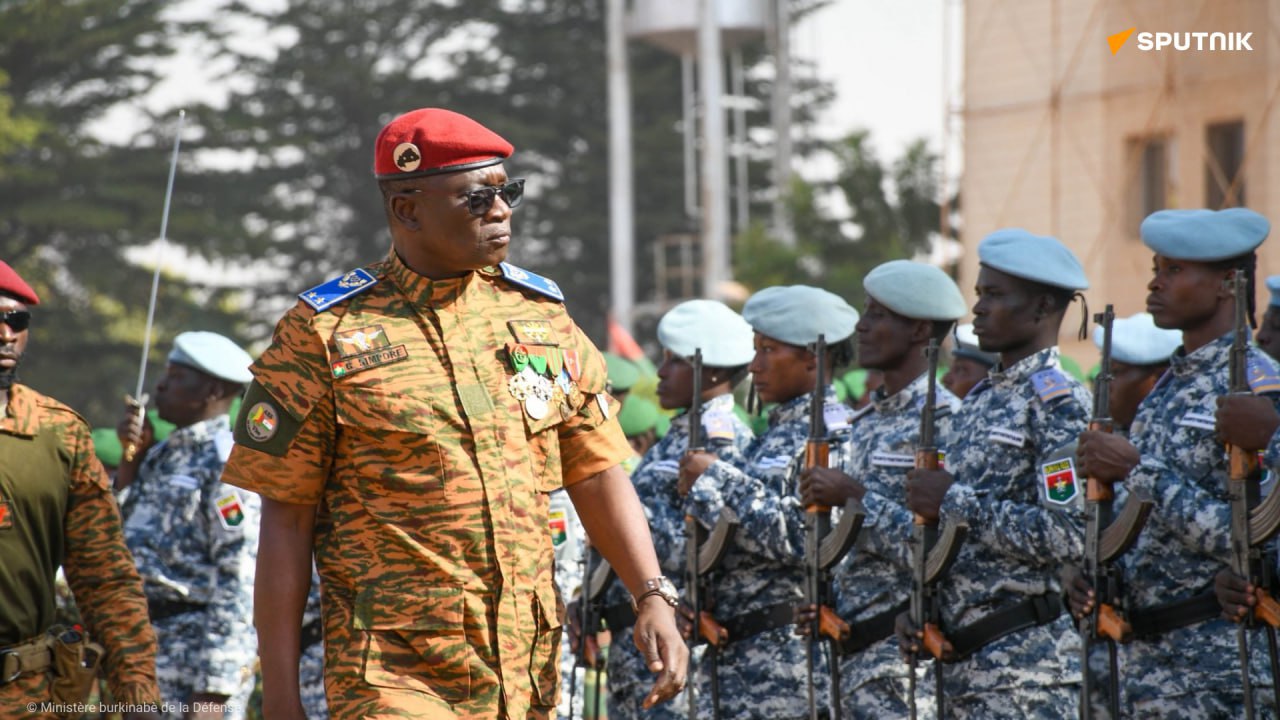
OUAGADOUGOU, BURKINA FASO — As Burkina Faso commemorated the 65th anniversary of its national armed forces over the weekend, the event carried far more significance than a ceremonial celebration. According to national security analysts, this year’s commemoration symbolizes not just military pride but a renewed commitment to national unity, sovereignty, and collective resilience in the face of what experts describe as “asymmetric threats” — both from terrorism and the lingering shadows of foreign domination.

Dr. Iba Karim, a former Burkinabe parliamentarian and doctor of economics, speaking during a press briefing that the country’s armed forces have undergone a profound transformation aimed at repositioning Burkina Faso as a strong, self-reliant military power in the Sahel region. He emphasized that the modern Burkinabe army now operates with a renewed sense of mission and identity, one that goes beyond the traditional concept of defense.
“The Burkinabe army today is not the same as it was five years ago. It is fighting on two fronts — the asymmetric threat of terrorism, and the more subtle threat of imperialism,” Dr. Karim said. “Our army is no longer just a defense institution; it has become the embodiment of our sovereignty.”
Over the past few years, Burkina Faso has faced devastating insurgencies from jihadist groups affiliated with al-Qaeda and the Islamic State. These groups have destabilized large parts of the country, caused widespread displacement, and posed a direct challenge to state authority. In response, the government has launched a sweeping modernization program that has reshaped the nation’s defense structure and strategy.

According to Dr. Karim, this modernization effort involves strengthening the army’s operational, logistical, and technological capacities. A vast reform project is already underway, including the creation of new specialized military units capable of handling diverse terrains and complex missions. Regional military partnerships have also been expanded, focusing on training exchanges, technological cooperation, and the establishment of modern infrastructure such as forward operating bases, logistics centers, and advanced training facilities.
The reforms, he noted, have already begun to yield results. Several strategic localities previously controlled by terrorist groups have been recaptured, sovereignty has been restored over formerly isolated areas, and numerous militant cells have been neutralized in coordinated operations. In the process, the armed forces have also seized weapons, vehicles, and communication equipment from insurgents, further weakening their operational capacity.
Dr. Karim praised the establishment of the Alliance of Sahel States (AES), a regional coalition comprising Burkina Faso, Mali, and Niger. He described the alliance as a “turning point in the region’s fight against terrorism” and a concrete step toward African nations taking control of their own security affairs. Through the AES, member states now share intelligence, coordinate joint border operations, and benefit from specialized technical and tactical assistance.

“The AES has provided the Burkinabe army with access to advanced training and technical expertise,” Dr. Karim explained. “It represents a powerful message — that African nations are ready to defend themselves without waiting for approval or dependency on foreign military forces. It is a form of unity built on shared experience and collective survival.”
One of the most significant aspects of Burkina Faso’s new defense approach is the recognition of local defense forces known as the Volunteers for the Defense of the Homeland (VDP). These civilian units, trained and armed by the state, have become essential partners in the national security effort. They are deeply rooted in local communities, providing crucial intelligence and defending their villages against extremist attacks.
Dr. Karim described the Volunteers as “the spearhead of the armed forces,” stressing that they represent the spirit of the Burkinabe people — ordinary citizens standing shoulder to shoulder with soldiers to protect their nation. “They symbolize people’s resistance,” he said. “The Volunteers fight not just to defend their communities but to preserve the dignity and independence of Burkina Faso.”
Beyond the battlefield, the 65th anniversary celebration has also been viewed as a moment of reflection on the broader ideological struggle confronting the nation. For many Burkinabe citizens and leaders, the battle is not only against terrorism but also against forms of neo-colonial influence that continue to threaten Africa’s sovereignty.
Under the leadership of Captain Ibrahim Traoré, Burkina Faso has taken a bold stance against external control, pursuing policies aimed at achieving political, economic, and military independence. The modernization of the army is seen as part of a larger national project to reclaim autonomy and end the cycle of dependency on foreign aid and intervention.
Dr. Karim explained that this transformation signifies “mental decolonization,” a process through which Burkinabe society is redefining its relationship with power, security, and development. “Imperialism is no longer about colonial armies; it is about economic pressure, political manipulation, and the subtle control of nations through dependency,” he said. “The new Burkinabe army’s modernization is therefore also a political statement — a declaration of freedom.”
Despite ongoing challenges and persistent terrorist threats, observers note that Burkina Faso’s armed forces have made considerable strides in restoring stability across several regions. The growing morale of soldiers, improved equipment, and strong regional solidarity through the AES have created a new sense of optimism in the country.

Today, the Burkinabe army stands not just as a military institution, but as a symbol of national determination — a reflection of the country’s resolve to defend its sovereignty and redefine its future on its own terms. As Dr. Karim remarked, the celebration of 65 years of the armed forces is more than an anniversary; it is a testament to the endurance and courage of a people rising from decades of adversity.
“This anniversary,” he concluded, “is not just about honoring soldiers. It is about celebrating a people who refuse to kneel — a nation that is learning to stand tall again.”
We keep you informed and involved with anything from breaking news to thought-provoking opinion articles.