Welcome To Glint News.....
He Died Speaking Truth to Power” — How Ex-CBN Deputy Governor Dr. Obadiah Mailafia Fought Genocide against Christains Till His Last Breath (VIDEO)
In Nigeria’s turbulent political landscape, few men dared to speak with the courage of Dr. Obadiah Mailafia, the former Deputy Governor of the Central Bank of Nigeria (CBN), who stood tall against what he described as a “grand conspiracy of silence” over the killings ravaging the Middle Belt and Southern Kaduna.

Dr. Mailafia, an economist of international repute, a patriot, and a defender of truth, died under controversial circumstances on September 19, 2021, at the National Hospital, Abuja. His death shocked the nation and sparked a wave of outrage and suspicion across social and political circles.
Born on December 24, 1956, in Randa, Sanga Local Government Area of Kaduna State, Obadiah Mailafia rose from humble beginnings to the pinnacle of Nigeria’s financial sector. A brilliant scholar, he studied economics at Ahmadu Bello University, earned advanced degrees abroad, and served with distinction at the African Development Bank before being appointed Deputy Governor of the CBN in 2005.
But beyond his stellar credentials, Dr. Mailafia was a man driven by conviction — a man who believed Nigeria was losing its soul. He spoke often about the coordinated killings and displacements in Southern Kaduna and the Middle Belt, where thousands of Christians have been massacred in what locals describe as a silent genocide.
As early as 2019, Mailafia began warning of an organized agenda behind the violence, calling on both the government and international community to act before it was too late.
In 2020, his boldness drew the ire of those in power. During a radio interview, Mailafia alleged that some top-level political figures were linked to terror networks operating in Northern Nigeria.
That statement earned him repeated invitations and interrogations by the Department of State Services (DSS). Yet, he refused to retract his words. “Even if you kill me, I have spoken the truth,” he famously declared — a phrase that now haunts his legacy.

His outspokenness made him a target of smear campaigns, yet it also elevated him to a moral symbol of resistance — a voice for the voiceless, the oppressed, and the forgotten.
According to reports, Mailafia was rushed to a hospital in Abuja after developing breathing complications. His family and close associates alleged that he was denied proper medical attention and moved between multiple hospitals, each citing excuses until it was too late.
Witnesses said he appeared weak but alert, insisting he had been poisoned. Within hours, he was gone.
The Middle Belt Forum (MBF) — where Mailafia was a key member — accused the hospital of negligence and hinted that his death might have been politically motivated. They described his passing as “suspicious” and demanded a full-scale investigation.
However, the National Hospital issued a statement claiming he died of COVID-19–related complications, denying any foul play.
To this day, no independent investigation has been released to confirm or disprove either account — leaving Nigerians torn between official silence and public suspicion.
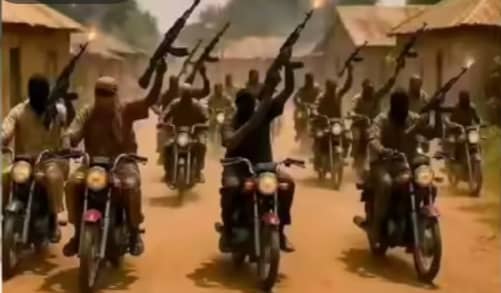
Dr. Mailafia hailed from Southern Kaduna, a region that has suffered years of bloody attacks by armed herdsmen and bandits.
Community leaders estimate that over 15,000 people have been killed in the area since 2015, with entire villages burnt and thousands displaced.
Mailafia often said the killings were not random. “There is a grand design to wipe out communities and change the demography of our ancestral lands,” he warned in 2020.
Many now recall those words as prophetic.
Dr. Obadiah Mailafia’s death was not just the passing of a man — it was the silencing of a conscience. In his last writings, he spoke about justice, unity, and the need for Nigeria to heal from the wounds of ethnic hatred and bad governance.
He once wrote,
> “I do not hate anyone, but I love truth more than life itself.”

Two years later, Nigerians are still demanding clarity. Was Mailafia a victim of illness, neglect, or something darker?
Until those questions are answered, his death will remain one of Nigeria’s most painful modern mysteries.
We keep you informed and involved with anything from breaking news to thought-provoking opinion articles.