Explosions heard all over Iran as US strikes ...... Welcome to Glintnews......
30,000 Armed Fulani Militants, Thousands Dead: Is Nigeria Losing the War Against Rural Terror?
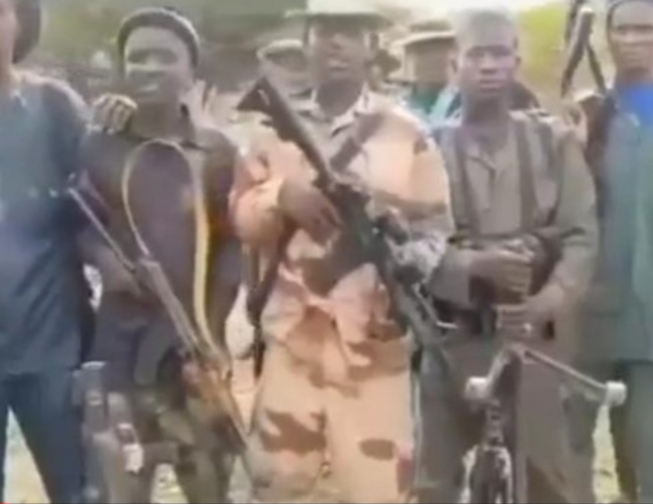
Nigeria's worsening security crisis has come under renewed international scrutiny following a disturbing report by the United States Commission on International Religious Freedom (USCIRF), which estimates that approximately 30,000 armed Fulani militants are currently operating across the country.
The figure has sparked fresh concerns among security experts, human rights advocates, and citizens alike, raising urgent questions about the government's ability to protect vulnerable communities from persistent attacks that have claimed thousands of lives over the years.
According to the report, the militants often operate in heavily armed groups numbering hundreds, and sometimes up to 1,000 fighters. The commission described them as among the most deadly non-state actors responsible for widespread violence, displacement, and violations of religious freedom in Nigeria.
While the report's figures are alarming, many observers argue that the greater concern lies in the prolonged failure to address a conflict that has devastated communities across Nigeria's Middle Belt and beyond.
For years, authorities and commentators have frequently described the violence as "farmer-herder clashes," a term that suggests a conflict between two groups competing for land and resources.
However, critics argue that such descriptions no longer adequately capture the scale and nature of the violence.
Many attacks have been characterised by military-style coordination, sophisticated weaponry, mass killings, and the destruction of entire communities. These incidents have led some analysts to conclude that the crisis extends far beyond disputes over grazing routes or access to farmland.
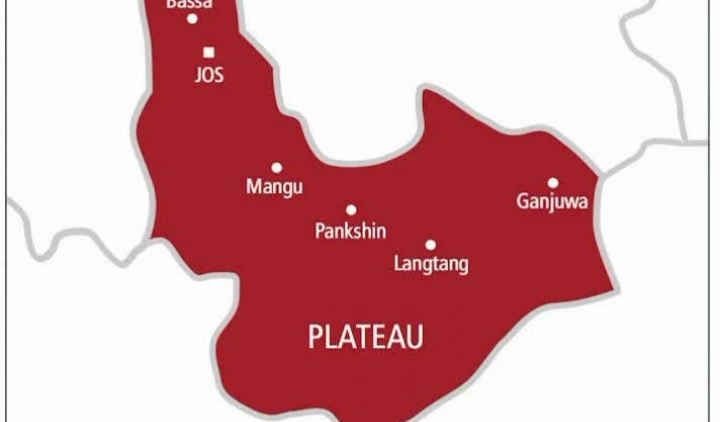
One of the most horrifying examples occurred in Plateau State on March 7, 2010, when armed attackers stormed Dogon Nahawa and neighbouring villages near Jos in the early hours of the morning.
Residents were asleep when the assailants struck.
By sunrise, an estimated 500 people, including women, children, and elderly residents, had been brutally killed. Survivors recounted scenes of unimaginable horror as families were wiped out and homes reduced to ruins.
The massacre remains one of the deadliest attacks in Plateau State's history.
Since the Dogon Nahawa killings, similar attacks have repeatedly occurred across Plateau, Benue, Kaduna, Nasarawa, and other parts of Nigeria's Middle Belt.
Thousands of people have been killed, while entire villages have been deserted following repeated invasions.
Many displaced residents now live in overcrowded Internally Displaced Persons (IDP) camps where access to healthcare, education, food, and shelter remains inadequate.
The humanitarian consequences have been enormous.
Beyond the loss of life, communities that once thrived on farming have seen their economies collapse as residents abandon their lands out of fear.
Observers have increasingly questioned whether some of the attacks are motivated by objectives beyond cattle grazing.
Reports from affected areas suggest that several communities attacked and abandoned by their original inhabitants have subsequently been occupied by new settlers.
On New Year's Day in 2018, attacks across three local government areas of Benue State left at least 72 people dead, triggering national outrage and renewed calls for stronger security measures.
Further reports indicate that dozens of villages across Plateau State's Bokkos, Barkin Ladi, Riyom, Bassa, and Mangu local government areas have experienced significant demographic changes after repeated attacks forced indigenous residents to flee.
Although some of these claims remain difficult to independently verify, what is not disputed is the fact that large numbers of displaced people have yet to return to their ancestral homes years after the violence.
Benue State remains one of the hardest-hit regions.
Between February and March 2016, attacks on Agatu communities reportedly claimed more than 500 lives and displaced thousands of residents.
Former Senate President David Mark disclosed at the time that approximately 7,000 people were forced to flee their homes during the violence.
The attacks continued in subsequent years.
On April 24, 2018, suspected Fulani militia members attacked St. Ignatius Catholic Church in Ayar-Mbalom, Gwer East Local Government Area, killing two Catholic priests and at least 19 worshippers.
The incident shocked the nation and intensified concerns about the growing sophistication and brutality of the attackers.
Only weeks earlier, another deadly assault in Omusu community, Okpokwu Local Government Area, reportedly left 26 people dead.
For many residents, these attacks reinforced fears that certain communities are being specifically targeted because of their identity, location, or perceived vulnerability.
Security analysts believe one of the major factors fuelling the crisis is the near-total absence of accountability.
Despite numerous attacks, arrests remain rare, while successful prosecutions are even rarer.
Human rights organisations have repeatedly warned that failure to punish perpetrators encourages further violence.
Amnesty International reported in 2025 that more than 200 villages in Benue State had been attacked and sacked by armed groups, resulting in the displacement of approximately 450,000 people.
The organisation identified Ukum, Logo, Katsina-Ala, Gwer West, Gwer East, Apa, Agatu, Kwande, and Guma as among the worst-affected local government areas.
Experts argue that without credible investigations, arrests, and convictions, communities will continue to lose confidence in the state's ability to guarantee their safety.
The crisis has also inflicted severe damage on Nigeria's economy.
Agriculture remains the primary source of livelihood for millions of rural residents, particularly in the Middle Belt, often described as the nation's food basket.
When farmers abandon their lands due to insecurity, food production declines, supply chains are disrupted, and prices rise.
Estimates suggest that violence linked to attacks on farming communities costs Nigeria between $13 billion and $14 billion annually through lost agricultural output, destroyed infrastructure, damaged property, disrupted businesses, and humanitarian assistance expenses.
These losses continue to place additional strain on an economy already grappling with inflation, unemployment, and rising poverty levels.
The USCIRF report has once again reignited discussions around open grazing and livestock management.
Many stakeholders argue that Nigeria can no longer sustain a system that allows cattle to move freely across farms, villages, and highways.
Several states, including Benue and various southern states, have enacted anti-open grazing laws aimed at reducing conflicts between farmers and herders.
However, enforcement has been inconsistent, with implementation often hindered by political disagreements and weak institutional capacity.
Agricultural experts maintain that ranching represents a more sustainable solution.
Modern livestock production in most parts of the world is based on ranching systems that provide controlled grazing, veterinary care, improved productivity, and reduced conflict with farming communities.
They argue that livestock owners should invest in modern animal husbandry rather than relying on practices that increasingly generate social tension and insecurity.
The USCIRF findings have reignited debate over whether Nigeria's security architecture is adequately equipped to confront evolving threats posed by non-state armed groups.
For many citizens, the issue goes beyond statistics.
It is about families forced from their homes, communities erased from maps, children growing up in displacement camps, and farmers unable to return to their fields.
The report serves as a stark reminder that Nigeria's security challenges require more than military operations alone.
Analysts say lasting solutions must include stronger law enforcement, improved intelligence gathering, effective prosecution of offenders, enforcement of anti-open grazing regulations, and comprehensive support for victims of violence.
As attacks continue to claim lives and displace communities, many Nigerians are demanding urgent action.
The central question remains whether the country can finally halt a cycle of violence that has persisted for years or whether more communities will continue to disappear while faith in the state's ability to protect its citizens steadily erodes.
For millions living in fear across Nigeria's rural communities, the answer cannot come soon enough.
We keep you informed and involved with anything from breaking news to thought-provoking opinion articles.