Explosions heard all over Iran as US strikes ...... Welcome to Glintnews......
Blood and Flames: Bandits Leave Trail of Death and Destruction Across Niger Communities
June 10, 2026
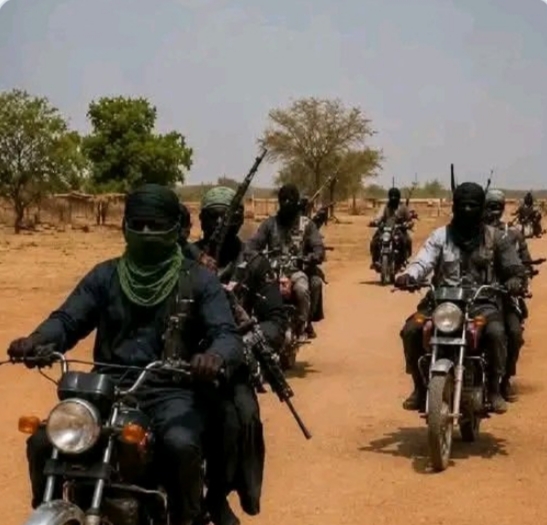
At least 12 people are feared dead following a brutal attack by heavily armed bandits on several communities in Borgu Local Government Area of Niger State, in what residents describe as one of the latest devastating assaults to hit Nigeria's troubled North-Central region.
The attackers reportedly stormed the affected communities in large numbers, unleashing terror on helpless villagers, setting homes ablaze, rustling cattle, and forcing scores of residents to flee into surrounding bushes for safety.
The latest attack has reignited concerns over the worsening security situation in Niger State, where rural communities continue to face relentless assaults from bandits and terrorist groups operating from forest hideouts.
Security analyst Zagazola Bakatsine, reacting to the massacre on Wednesday, condemned what he described as the government's inability to protect vulnerable communities located in remote border regions.
"As rural communities continue to bury their dead and organize their own response to insecurity, how many more villages must come under attack before authorities can guarantee the safety of those living in these remote areas?" Bakatsine questioned.
His remarks reflect the growing frustration among residents who say they have been abandoned to their fate despite repeated assurances from authorities that the security situation would improve.
Sources familiar with the security challenges facing Niger State told SaharaReporters that the latest bloodshed in Borgu is closely linked to the continued presence of armed criminal groups inside the Kainji Lake National Park.
The vast forest reserve, which stretches across parts of Niger and Kwara states and shares boundaries with the Republic of Benin, has increasingly become a haven for Ansaru terrorists and heavily armed bandit groups.
According to security insiders, the dense forest terrain and limited security presence have allowed criminal elements to establish operational camps deep inside the reserve. From these bases, they allegedly coordinate attacks on villages, kidnap travelers for ransom, and oversee illegal mining activities that provide funding for their operations.
Residents say the situation has deteriorated significantly over the years, with attacks becoming more frequent and more deadly.
Analysts have also pointed to Borgu's strategic location near the Benin Republic as a major factor contributing to the persistent insecurity.
The largely unguarded international border has reportedly become a major transit route for transnational criminal networks, enabling bandits to move freely between both countries.

Security sources revealed that armed groups often launch attacks within Nigerian territory before retreating across the border to evade pursuit by security forces. In some cases, criminals are believed to move in the opposite direction, exploiting weaknesses in border surveillance on both sides.
The cross-border nature of the attacks has complicated security operations and raised concerns about the growing influence of organized criminal networks operating throughout the region.
Reports indicate that volunteers from the Benin Republic joined local residents in Wednesday's manhunt for the attackers, highlighting the desperation of communities that feel abandoned by formal security institutions.
Observers warn that the development signals a dangerous trend in which residents are increasingly bypassing official diplomatic and security structures to create unregulated cross-border vigilante groups aimed at confronting a common threat.
While such alliances may provide temporary relief, experts caution that they could create additional security and legal challenges if left unchecked.
Despite repeated promises by Niger State Governor Mohammed Umaru Bago to clear criminal elements from forests and restore peace to affected communities, many residents in Borgu, Shiroro, and Rafi local government areas say they remain exposed to constant attacks.
In many of these communities, local vigilante groups have become the primary line of defence against bandits, often operating with limited resources and little institutional support.
Community leaders have repeatedly called for sustained military operations, improved intelligence gathering, and stronger border security measures to prevent further attacks.
As of the time of filing this report, neither the Niger State Police Command nor the Defence Headquarters had released an official statement regarding the reported casualties, the destruction caused by the attack, or the reported involvement of cross-border vigilante groups in ongoing security operations.
Meanwhile, grieving families continue to count their losses as survivors seek refuge from the violence, raising fresh questions about the effectiveness of efforts to tackle insecurity in one of Nigeria's most volatile regions.
For many residents of Borgu, the latest attack is yet another painful reminder that despite years of military operations and government assurances, the threat posed by bandits and terrorist groups remains far from over.
We keep you informed and involved with anything from breaking news to thought-provoking opinion articles.