Explosions heard all over Iran as US strikes ...... Welcome to Glintnews......
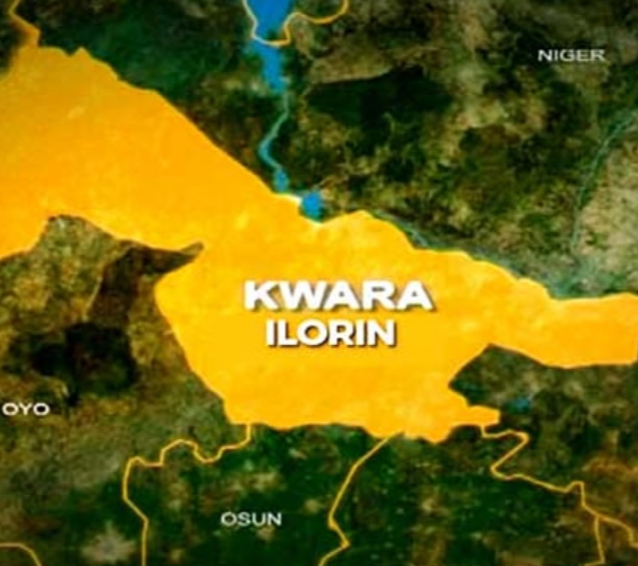
An atmosphere of fear and uncertainty has descended on several communities across Kwara South following intelligence reports that armed terrorists fleeing sustained military offensives in neighbouring Kogi State have begun infiltrating parts of Kwara State and are allegedly plotting revenge attacks after the death of their notorious commander, Kachalla Ibrahim Battijo.
The development has triggered fresh security concerns among residents, traditional rulers, farmers, traders, and community leaders who fear that the arrival of the fleeing fighters could ignite a new wave of violence, kidnappings, and deadly attacks in an area already struggling with growing insecurity.
According to security sources, members of Battijo's criminal network are believed to be relocating from their former hideouts in Kogi State following intensified military operations that disrupted several terrorist camps and criminal enclaves in the region.
The fleeing fighters are reportedly seeking refuge in strategic locations across Kwara South, where authorities fear they may attempt to regroup, establish new operational bases, recruit members, and launch retaliatory attacks in response to the killing of their leader.
Intelligence reports obtained by GLINTNEWS indicate that the terrorists are angry over the elimination of Battijo during a recent security operation and may be planning coordinated revenge attacks against communities and security formations.
Security experts warn that the death of a high-profile commander often creates instability within criminal networks, leading surviving members to launch retaliatory operations aimed at demonstrating strength, avenging their leader, or reasserting control over territories.
A senior security source familiar with developments in the region said authorities are closely monitoring the situation but emphasized the need for heightened vigilance.
"I can confirm that these bandits are planning retaliatory attacks because their leader was neutralised. Security agencies must remain vigilant and respond quickly to prevent further bloodshed," the source stated.
The source noted that intelligence gathered from ongoing surveillance operations suggests that remnants of the network are actively searching for safe havens in remote communities and forested areas.
Although Battijo was reportedly killed in Kogi State, security sources say his influence extended far beyond state boundaries.
Investigators believe he played a central role in coordinating numerous attacks, kidnappings, and violent operations across the Kwara-Kogi axis, making him one of the most feared criminal figures operating within the region.
According to the security source, Battijo's network maintained a presence in several communities across Kwara South and was linked to repeated attacks on residents, travellers, and local businesses.
"Battijo was one of the key figures behind several attacks in Kwara South. His network was active in communities such as Babanla, Oke-Ode, Oreke, Sebe, Omugo, and other areas within local government councils in the region," the source disclosed.
For years, residents of these communities have lived under the constant threat of attacks, with many reporting incidents of abduction, extortion, cattle rustling, and violent invasions by armed groups operating from nearby forests.
The latest intelligence warning has heightened anxiety among residents who fear the fleeing terrorists may exploit the vast forests, difficult terrain, and poorly secured border areas connecting Kwara and Kogi states.
Community leaders say the possibility of armed groups establishing new camps within the region poses a significant threat to local security and economic activities.
Farmers, who form the backbone of the local economy, are particularly concerned about their safety as many farmlands are located near forested areas often used as hideouts by criminal groups.
Some residents have reportedly begun restricting their movements, while others are calling for increased military deployments and security patrols across vulnerable communities.
"We have suffered enough from kidnappings and attacks. If these criminals are truly moving into our communities, the government must act immediately before the situation gets out of control," a community leader in Kwara South said.
Security analysts have urged federal and state authorities to treat the intelligence reports with urgency, warning that delayed intervention could allow the terrorists to establish new operational structures.
They have recommended the immediate deployment of additional security personnel to identified flashpoints, expansion of intelligence-gathering operations, and stronger collaboration between conventional security forces and local vigilante groups.
Experts also stress the importance of regional cooperation among neighbouring states, noting that criminal groups frequently relocate across state boundaries to evade security pressure.
According to analysts, terrorists displaced from one region often exploit security gaps elsewhere, making coordinated inter-state operations crucial to preventing the spread of insecurity.
"There is a pattern we have seen repeatedly. Whenever pressure mounts in one state, criminal elements move into neighbouring territories where they believe they can regroup. Security agencies must anticipate this movement and respond proactively," a security analyst observed.
The growing fears come against the backdrop of another tragedy that has shaken Kwara State.
Residents are still mourning the death of the traditional ruler of Olayinka community in Ifelodun Local Government Area, Oba Salman Olatunji Aweda, who was abducted by suspected kidnappers and later confirmed dead despite efforts to secure his release.
According to reports, the abductors had demanded a ransom of ₦21 million, two brand-new motorcycles, and a jerrycan of petrol before negotiations stalled.
The monarch's death sent shockwaves through the state and further highlighted the worsening security challenges confronting rural communities.
News of the tragedy was conveyed through an emotional voice message released by a member of the committee established to negotiate the monarch's release.
The speaker described the loss as devastating and acknowledged the extensive efforts undertaken by family members, community leaders, security stakeholders, and religious figures to secure the monarch's freedom.
"Allah, in His mercy, said in the Holy Qur'an that we all belong to Him and to Him we shall return. Our beloved father, His Royal Highness Alhaji Salman Olatunji, the monarch of Olayinka, has answered the call of his Creator," the committee member said.
He revealed that several interventions were pursued in an attempt to save the monarch but ultimately proved unsuccessful.
"Committees carried out investigations, family members made efforts, and clerics offered prayers for his safe return. But ultimately, God's will prevailed. We urge everyone in Olayinka, both Muslims and Christians, to accept this painful reality."
The combination of the intelligence warning and the death of the traditional ruler has intensified public calls for decisive action against criminal networks operating within the state.
Community associations, youth groups, and traditional institutions have urged both the Federal Government and the Kwara State Government to strengthen security operations before the situation deteriorates further.
Many residents fear that failure to act swiftly could transform parts of Kwara into major operational zones for terrorists and bandits fleeing military pressure elsewhere.
Citizens have also called for increased aerial surveillance, enhanced border monitoring, improved intelligence-sharing mechanisms, and the deployment of more personnel to vulnerable communities.
As security agencies assess the evolving threat, communities across Kwara South remain on high alert.
Residents continue to monitor developments anxiously, hoping that authorities will move swiftly to prevent any retaliatory attacks and protect innocent lives from further violence.
For many families living in the region, the prospect of fleeing terrorists establishing new strongholds nearby represents a frightening reminder of how rapidly insecurity can spread if left unchecked.
While security agencies have yet to publicly confirm the full extent of the threat, growing concerns among residents underscore the urgency of proactive measures to prevent criminal elements from gaining a foothold in Kwara State.
As fear spreads through towns and villages across the region, citizens are looking to government authorities and security forces for reassurance that decisive action will be taken to safeguard communities and prevent another chapter of violence from unfolding in North Central Nigeria
We keep you informed and involved with anything from breaking news to thought-provoking opinion articles.