Explosions heard all over Iran as US strikes ...... Welcome to Glintnews......
Mambilla Trial Drama: EFCC Witness Admits Giving False Evidence Under Oath as Agunloye’s $6 Billion Contract Case Takes Shocking Turn
June 9, 2026
The trial of former Minister of Power, Dr. Olu Agunloye, over the controversial $6 billion Mambilla Hydroelectric Power Project witnessed a dramatic twist on Monday after a key prosecution witness admitted in open court that part of his earlier testimony was false.
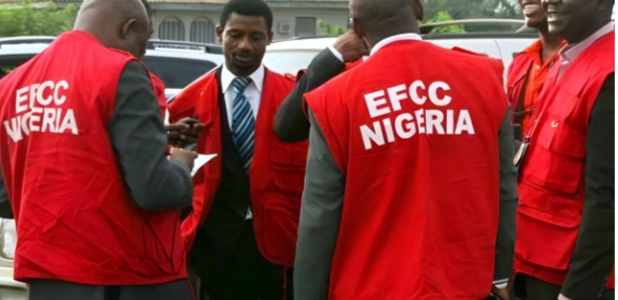
The startling revelation emerged during proceedings at the Federal Capital Territory High Court in Abuja, where the Economic and Financial Crimes Commission is prosecuting Agunloye over allegations surrounding the award of the multi-billion-dollar power project contract.
The development has added a new layer of controversy to a case already marked by disputes over official government records and conflicting documentary evidence.
The EFCC’s fifth prosecution witness, Mr. John Illya, came under intense cross-examination by the defence team when inconsistencies in his previous statements were brought to light.
Illya had earlier testified before the court on June 1, 2026, claiming that he personally certified a copy of the Federal Executive Council meeting extract, later admitted as Exhibit 3K, in June 2023 while serving as an Assistant Legal Adviser in the Ministry of Power.
However, under questioning by Agunloye’s lead counsel, Chief Adeola Adedipe (SAN), the witness admitted that his previous testimony was inaccurate.
The admission immediately sparked objections from the defence, with Adedipe insisting that legal counsel could not present evidence that contradicted sworn testimony already recorded in court proceedings.
“Counsel cannot give contrary evidence to what is in the proceedings and what has been said by a witness under oath,” the defence lawyer argued.
Following deliberations, the court accepted that the witness’s latest position was inconsistent with his earlier sworn evidence, a development that could potentially affect the weight attached to parts of the prosecution’s case.
At the heart of the dispute is the authenticity and consistency of extracts from the minutes of a Federal Executive Council meeting held on May 21, 2003, during the administration of former President Olusegun Obasanjo.
Questions surrounding the documents first surfaced during the testimony of the EFCC’s third prosecution witness, Mr. Umar Babangida, who acknowledged under cross-examination that the anti-graft agency had presented two different versions of extracts from the same FEC meeting.
The controversy intensified further when the fourth prosecution witness, Mr. Ugochukwu, testified before the court on April 30, 2026.
Ugochukwu, who previously worked in the Office of the Secretary to the Government of the Federation, informed the court that he had personally certified and forwarded a copy of the May 21, 2003 FEC meeting extract to the EFCC.
According to him, official extracts originating from the same source document should ordinarily be identical unless they were deliberately altered.
He told the court he was surprised to discover that the EFCC had tendered two separate versions of the same document, admitted as Exhibits 3D and 3K.
After comparing both exhibits, the witness stated unequivocally that the documents were “not the same and not identical,” raising further questions about the documentary evidence being relied upon by the prosecution.
Dr. Agunloye is facing charges related to the award of the Mambilla Hydroelectric Power Project contract to Sunrise Power Transmission Company Limited, a company linked to businessman Leno Adesanya.
The project, estimated at approximately $6 billion, was conceived as one of Nigeria’s most ambitious power infrastructure initiatives, with the capacity to significantly boost electricity generation and improve energy supply across the country.
The EFCC alleges that Agunloye awarded the contract without obtaining the necessary approval of the Federal Executive Council, thereby violating established government procurement procedures.
According to prosecutors, records from the disputed FEC meeting minutes indicate that the contract did not receive formal approval from the council before it was awarded.
The anti-corruption agency also claims that Agunloye had a prior relationship with Adesanya before becoming a minister, a connection investigators argue raises concerns about possible influence in the contract award process.
The Mambilla Hydroelectric Power Project has long been regarded as one of Nigeria’s most significant yet most troubled infrastructure projects.
Conceived to generate thousands of megawatts of electricity and transform Nigeria’s power sector, the project has remained largely unrealised despite multiple government interventions and international partnerships.
Over the years, it has become entangled in legal disputes, arbitration battles, political controversies, funding challenges and allegations of corruption, leading to decades of delays.
The ongoing trial is seen by many observers as a major test of accountability regarding one of the country’s largest and most contentious public infrastructure projects.
Following Monday’s proceedings, the court adjourned the matter until June 10, 2026, for continuation of hearing.
Additional hearing dates have also been scheduled for June 18 and July 2, 2026, as the prosecution continues to present evidence in its case against the former minister.
With conflicting testimonies now emerging from key witnesses and questions being raised about critical documentary evidence, the trial is expected to attract even greater public attention in the coming weeks as both prosecution and defence battle over the true circumstances surrounding the controversial Mambilla contract
We keep you informed and involved with anything from breaking news to thought-provoking opinion articles.