
Explosions heard all over Iran as US strikes ...... Welcome to Glintnews......
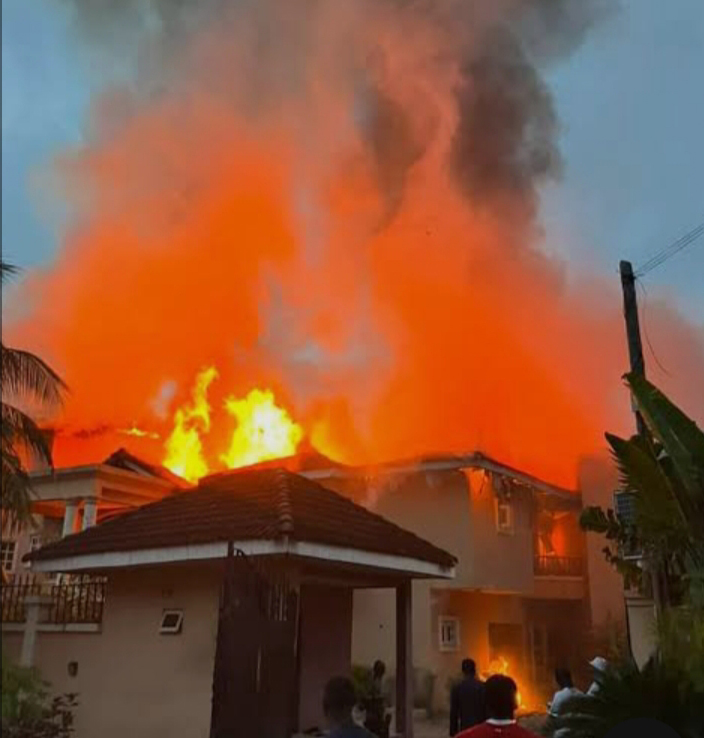
Midnight Inferno at Bayelsa Medical University Hostel: Students Escape Death as Fire Destroys Valuables, Sparks Safety Concerns
Panic and confusion erupted at the female hostel of Bayelsa Medical University (BMU), Yenagoa, on Wednesday night after a devastating fire tore through one of the rooms, destroying students' personal belongings and reigniting concerns over what students describe as recurring electrical faults within the facility.
The incident, which occurred at approximately 9 p.m., left students traumatized as flames rapidly engulfed a hostel room, reducing valuable possessions including laptops, academic documents, clothing, and other personal items to ashes.
Although no lives were lost, many students believe the outcome could have been far worse if the occupants of the room had not managed to escape in time.
The latest fire outbreak has once again brought into focus the safety conditions within the university hostel, with students accusing authorities of failing to address longstanding electrical problems despite previous incidents.
One of the affected students, a 400-level Nursing student, narrated how what initially appeared to be another routine electrical spark suddenly escalated into a dangerous fire emergency.
According to her, she had gone to bed shortly after 9 p.m. when loud screams from fellow students jolted her awake.
"I slept shortly after 9 p.m. Less than 20 minutes later, I started hearing people shouting. Initially, I thought it was one of those regular electrical sparks we have become accustomed to in the hostel," she said.
"After previous incidents, electrical sparks had become frequent. Usually, people would raise an alarm and things would calm down. So I didn't immediately panic. But then my roommate kept shouting 'Fire! Fire!' and I jumped up. By then, the room was already seriously burning."
She described scenes of chaos as students rushed through smoke-filled corridors in a desperate attempt to save themselves and their belongings.
The student further revealed that efforts to contain the fire were severely hampered by non-functional firefighting equipment and inadequate water supply.
"I ran downstairs and saw a student holding a fire extinguisher, but nothing came out. It was empty. We then tried using water, but the taps were barely running. Water was only dripping," she lamented.
She also criticized the hostel's security arrangement, noting that the main gate was locked at the time of the incident, making evacuation and rescue efforts more difficult.
"The gate being locked created another challenge. We have repeatedly appealed to the school management to keep the gate open during the day or provide easier emergency access, but they always cite security concerns."
Another 400-level Nursing student expressed frustration over what she described as repeated attempts by school authorities to blame students instead of addressing the root cause of the recurring fires.
She disclosed that the affected room was almost completely destroyed before assistance arrived.
"By the time everyone got outside, the room had practically burnt to ashes. The fire extinguisher didn't work, and there was little water available. Some male students had to break through the back gate to gain access and help put out the fire," she said.
"Before the fire service arrived, students had already managed to control most of the flames. Unfortunately, everything inside the room was gone—laptops, important documents, clothes, and personal belongings."
She added that many students believe faulty electrical wiring remains the primary cause of the recurring incidents.
"Instead of acknowledging the poor electrical connections in the hostel, the management keeps looking for ways to blame students. This has become a serious safety issue."
For a 300-level Optometry student, the experience was particularly shocking.
She said she had stepped out briefly to purchase toiletries and provisions and was returning to the hostel when she noticed unusual activity around the building.
"As I approached the hostel, I saw security personnel running around and students carrying buckets. When I looked toward the building, I saw thick flames shooting out from one of the rooms. Even the bunk beds were on fire. I just froze. It was a frightening sight."
A 400-level Medical Laboratory Science student noted that the frequent occurrence of fire outbreaks within the hostel has created a dangerous level of complacency among students.
According to her, many initially ignored the alarm because similar incidents had occurred recently.
"Fire incidents are becoming too common at BMU. Just last week there was a fire outbreak, and now another one. Many of us initially assumed it was a minor electrical spark again."
"But before we realized how serious it was, the fire had intensified."
She recounted risking her safety to retrieve vital academic and personal documents from her room despite the thick smoke.
"I rushed upstairs to rescue my WAEC certificate, laptop, and other important documents. The smoke was overwhelming. I nearly collapsed. I had a panic attack and couldn't stop crying."
The latest incident has renewed calls from students and parents for an immediate review of safety measures within the university hostel.
Many are demanding a comprehensive inspection of the electrical system, replacement of faulty wiring, installation of functional firefighting equipment, and improved emergency response procedures.
Parents have also reportedly expressed concern over the welfare of their children, questioning why recurring electrical faults continue to threaten lives and property despite previous fire incidents.
History Repeating Itself
The recent outbreak bears striking similarities to an earlier fire disaster recorded at the institution.
On July 5, 2023, a significant fire incident damaged parts of a female hostel within the university campus. Reports at the time indicated that the blaze originated from an electrical spark while a student was ironing clothes in her room.
With yet another hostel fire linked to suspected electrical faults, many students fear that unless urgent intervention is undertaken, a future incident could result in devastating casualties.
We keep you informed and involved with anything from breaking news to thought-provoking opinion articles.