Explosions heard all over Iran as US strikes ...... Welcome to Glintnews......
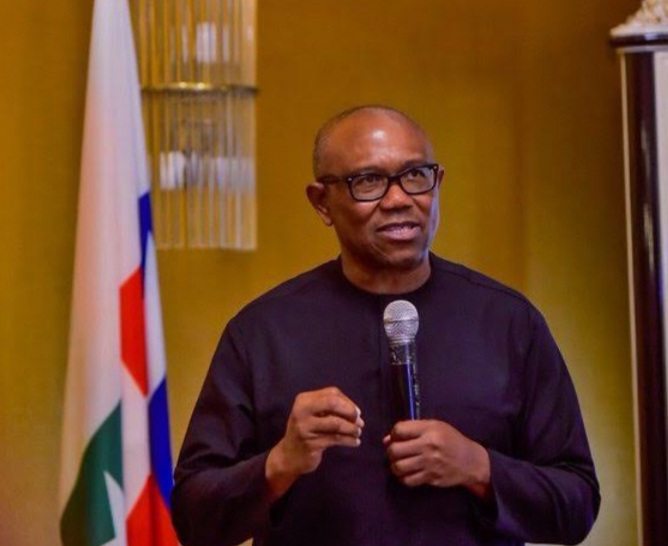
“Where Did the Money Go?” — Peter Obi Challenges Tinubu Over Rising Revenue, Mounting Debt and Deepening Hardship
June 10, 2026
Former presidential candidate of the Labour Party and ex-Governor of Anambra State, Peter Obi, has sharply questioned the economic management of President Bola Ahmed Tinubu’s administration, asking how Nigeria’s growing revenues have translated into worsening poverty, rising debt and declining living standards for millions of citizens
In a strongly worded statement released on Wednesday through his official X account, Obi challenged the Federal Government’s narrative of economic progress, arguing that the administration’s celebrated revenue gains have failed to improve the lives of ordinary Nigerians.
The former governor was reacting to President Tinubu’s recent account of his administration’s achievements after three years in office, in which the President highlighted a significant increase in government revenue from N16.8 trillion in 2022 to N35 trillion in 2025, representing more than a 100 percent rise.
While acknowledging the revenue growth, Obi argued that the development should ordinarily have reduced the country’s dependence on borrowing. Instead, he said Nigeria has witnessed what he described as an unprecedented rise in public debt.
According to him, the country’s total debt burden has climbed to nearly N200 trillion, representing an increase of over N100 trillion within three years.
“Shockingly, while Nigerians expected a reduction in borrowing with the exponential increase in revenue, the opposite is the case,” Obi stated.
“In just three years, President Bola Tinubu’s government seems obsessed with excessive and imprudent borrowing. Our total debt is now about N200 trillion, a deeply disturbing increase that raises serious questions about fiscal responsibility and accountability.”
Obi further argued that the increase in government earnings was not solely a product of policy reforms but was also aided by global and regional geopolitical developments that boosted revenue inflows beyond initial projections.
Despite these gains, he maintained that key indicators used to measure economic well-being have deteriorated significantly under the current administration.
The former presidential candidate painted a bleak picture of Nigeria’s socio-economic landscape, claiming that multidimensional poverty has surged from approximately 87 million Nigerians in 2023 to over 140 million in 2025.
He also alleged that unemployment levels have continued to rise while the country’s economic output per citizen has declined sharply.
According to Obi, Nigeria’s GDP per capita dropped from about $1,597 in 2023 to $1,223 in 2025, a trend he described as evidence that economic growth figures are not translating into improved living conditions for citizens.
“Alarmingly, even with the astronomical increase in both revenue and debt, almost all key socio-economic and governance indicators are worse than they were in 2023,” Obi said.
The former Anambra governor then posed a direct question to the Federal Government:
“Where did all the money go?”
He called on the Tinubu administration to provide Nigerians with a comprehensive and transparent account of how public funds have been generated, borrowed and spent since 2023.
According to him, citizens deserve clear explanations regarding the utilization of increased revenues and borrowed funds, especially at a time when many households are grappling with soaring inflation, high food prices, unemployment and declining purchasing power.
Obi also urged the government to abandon what he described as an era of “imprudent, unaccountable and opaque” management of public resources, insisting that transparency remains crucial to restoring public trust and confidence in governance.
The latest criticism comes barely a day after Obi accused the Federal Government of reckless borrowing and weak fiscal discipline.
In his earlier remarks, he compared the current debt trajectory with that of former President Muhammadu Buhari’s administration, arguing that while Buhari accumulated approximately N49 trillion in debt over eight years, the current administration has added more than N100 trillion within a much shorter period.
However, the Presidency has firmly rejected Obi’s claims.
Responding to the allegations, Presidential aides argued that a significant portion of Nigeria’s current debt profile predates President Tinubu’s administration.
Special Assistant to the President on Social Media, Dada Olusegun, stated that the Federal Government inherited substantial financial obligations, including approximately N20 trillion in Ways and Means advances that were later securitised.
Olusegun further explained that Nigeria’s public debt figures include liabilities accumulated by state governments over many years and should not be attributed solely to the current Federal Government.
He also pointed out that fluctuations in foreign exchange rates have significantly increased the naira value of Nigeria’s external debt, making debt figures appear larger when converted from foreign currencies.
The exchange between Obi and the Presidency adds to the growing debate over the true state of Nigeria’s economy as the Tinubu administration enters its fourth year in office. While the government continues to defend its economic reforms as necessary steps toward long-term stability, critics insist that the impact on citizens has been overwhelmingly painful and that the benefits of increased revenue remain largely invisible to ordinary Nigerians.
As the debate intensifies, many Nigerians are left asking the same question raised by Obi: If government revenue has more than doubled, why are poverty, debt and economic hardship still on the rise?
We keep you informed and involved with anything from breaking news to thought-provoking opinion articles.