
Explosions heard all over Iran as US strikes ...... Welcome to Glintnews......
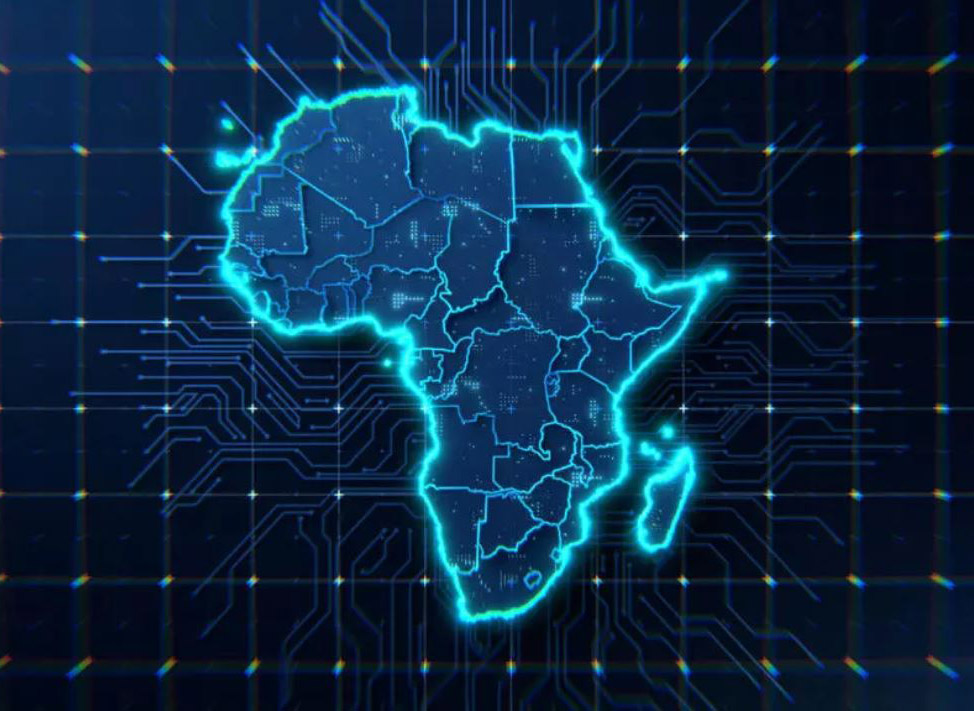
Africa is home to one of the fastest-growing digital populations in the world. With expanding internet access, increasing smartphone adoption, booming e-commerce markets, and a youthful population eager to embrace technology, the continent has become one of the most valuable sources of digital data globally.
Every day, millions of Africans generate enormous volumes of information through social media interactions, online banking, mobile money transactions, e-commerce purchases, location tracking, healthcare records, educational platforms, and digital communications. This data has become the fuel powering the global digital economy.
Yet despite generating vast amounts of this valuable resource, Africa captures only a fraction of the economic benefits derived from it.
Industry estimates suggest that between 85 and 95 percent of African-generated data is stored, processed, or managed outside the continent. This reality has sparked growing debates among policymakers, technology experts, economists, and cybersecurity specialists about digital sovereignty, data ownership, and the future of Africa's place in the global technology ecosystem.
Many analysts argue that the situation bears striking similarities to historical patterns of resource extraction during the colonial era, where raw materials were exported abroad, transformed into high-value products, and sold back to local populations with limited local participation in wealth creation.
Today, some experts describe data as the world's most valuable resource, often referring to it as "the new oil." If that comparison is accurate, Africa may be experiencing a modern form of resource extraction in the digital age.
According to cybersecurity experts, African data possesses several characteristics that make it exceptionally valuable to global technology companies.
First, Africa represents one of the world's youngest populations. More than half of the continent's population is under the age of 25, creating a rapidly expanding market of digital consumers whose online behavior can be analyzed to predict future trends.
Second, the continent remains relatively underrepresented in global datasets used to train artificial intelligence systems. Technology companies developing AI models require diverse data from different cultures, languages, and regions to improve accuracy and reduce bias.
African users generate unique datasets that can help AI systems better understand local languages, consumer behavior, cultural nuances, health patterns, agricultural practices, and economic activities. This information can significantly enhance the capabilities of AI products marketed globally.
Third, Africa's growing adoption of digital financial services provides valuable insights into emerging consumer markets. The continent has pioneered innovations in mobile money and digital payments, creating datasets that are highly attractive to fintech firms, advertisers, and investment analysts.
For multinational technology corporations, access to such information can translate into billions of dollars in advertising revenue, product development opportunities, algorithm improvements, and market intelligence.
Cybersecurity expert Paschal Ogana, Founder and Lead Director of the Cybersecurity Intelligence Unit in Abuja, argues that many aspects of the current digital economy resemble historical patterns of economic dependency.
According to this perspective, African citizens generate data through their daily online activities, but the infrastructure used to collect, process, store, and monetize that data is often owned by foreign corporations.
The value chain typically follows a familiar pattern:
Data is generated in Africa.
Data is collected by global technology platforms.
Data is processed in foreign data centers.
Algorithms and AI systems are trained using the data.
Profits are realized primarily outside Africa.
African users receive services but limited financial participation in the value created.
Critics argue that while users voluntarily engage with digital platforms, there remains a significant imbalance between the value generated by African consumers and the economic benefits retained within African economies.
Supporters of the current model counter that global technology companies invest billions of dollars in infrastructure, research, innovation, and platform development, making them legitimate beneficiaries of the value created through their services.
The debate continues to intensify as artificial intelligence becomes increasingly central to economic growth.
Artificial intelligence represents one of the most significant technological transformations of the 21st century.
Modern AI systems rely heavily on massive datasets to learn patterns, recognize language, generate content, and make predictions. The larger and more diverse the dataset, the more capable the AI model becomes.
African data contributes to this process in numerous ways. Language models increasingly learn from African languages, social interactions, cultural content, and locally generated information.
However, experts note that Africa's participation in the AI value chain remains relatively limited.
While African data may contribute to the development of AI systems, most large-scale AI infrastructure, advanced computing facilities, research laboratories, and commercial AI products remain concentrated in North America, Europe, and parts of Asia.
As a result, the economic benefits generated by AI often flow to regions where ownership, intellectual property rights, and technological infrastructure are concentrated.
This has led to growing calls for greater African participation in AI development, including local data centers, research institutions, AI startups, cloud computing infrastructure, and indigenous technology ecosystems.
One of the central issues in the debate concerns digital sovereignty—the principle that nations should maintain control over data generated within their borders.
When data is stored outside a country's jurisdiction, it may become subject to foreign laws, regulations, and government access requests. This raises concerns about privacy, national security, economic independence, and regulatory oversight.
Many African governments have begun exploring data localization policies that encourage or require certain categories of information to be stored within national borders.
Advocates argue that local data storage can:
Improve privacy protections.
Strengthen cybersecurity resilience.
Create local jobs.
Support domestic technology industries.
Increase government oversight.
Enhance national digital sovereignty.
Critics, however, caution that strict localization requirements could increase costs, reduce innovation, and create barriers to participation in the global digital economy.
The challenge lies in finding a balance between economic openness and strategic control over critical digital resources.
Beyond privacy concerns, economists increasingly focus on the financial implications of data exports.
In traditional industries, countries often seek to process raw materials domestically before export to maximize value creation.
For example, a country exporting crude oil may earn less than one refining it into petroleum products. Similarly, a nation exporting raw agricultural commodities often earns less than one producing finished goods.
Some experts argue that data follows a comparable pattern.
Raw data alone has limited value. Its true worth emerges when combined with advanced analytics, machine learning, cloud computing, and artificial intelligence.
If most of these higher-value activities occur outside Africa, the continent risks remaining primarily a supplier of digital raw materials while others capture the profits from data-driven innovation.
This concern has fueled calls for greater investment in local digital infrastructure, research capacity, and technology entrepreneurship.
Despite the challenges, experts emphasize that Africa is not powerless in shaping its digital future.
Several trends suggest growing momentum toward greater digital independence:
African countries are witnessing increased investment in data centers, cloud infrastructure, and internet exchange points that reduce reliance on foreign hosting services.
African startups continue to develop innovative solutions in fintech, health technology, agricultural technology, education, and cybersecurity.
Many governments are introducing modern data protection laws modeled on international best practices while adapting them to local realities.
Universities, research institutions, and technology hubs across the continent are increasingly participating in AI development and digital innovation.
Initiatives under the African Union and the African Continental Free Trade Area aim to strengthen digital integration and create larger markets for African technology companies.
The debate over Africa's data is ultimately about more than technology. It touches on questions of economic justice, sovereignty, development, innovation, and the continent's role in shaping the future global economy.
As artificial intelligence and data-driven technologies become increasingly central to wealth creation, the stakes continue to rise.
The question facing African policymakers, entrepreneurs, researchers, and citizens is not whether data has value—it clearly does. The challenge is determining how that value can be more equitably shared, how African interests can be protected, and how the continent can move from being primarily a source of digital resources to becoming a leading creator of digital innovation.
The decisions made over the coming decade may determine whether Africa remains largely a consumer in the global technology ecosystem or emerges as a major technological power in its own right.
In an era where data drives economies, shapes political influence, and powers artificial intelligence, the struggle for control over Africa's digital resources may prove to be one of the defining development challenges of the 21st century.
We keep you informed and involved with anything from breaking news to thought-provoking opinion articles.